
Starting a family is a cherished dream for many couples. However, for some, conceiving naturally may take longer than expected due to various fertility-related factors. In such situations, consulting an experienced fertility specialist can help couples understand the possible causes of infertility and explore suitable treatment options. If you are searching for an IVF Specialist in Kanpur, Dr. Mamta Agnihotri is associated with fertility, infertility, IVF and women’s healthcare.
Infertility treatment requires an individualized approach because every couple has a different medical history, reproductive health profile and treatment requirement. A fertility specialist can evaluate these factors and recommend an appropriate course of action.
Who Is Dr. Mamta Agnihotri?
Dr. Mamta Agnihotri is a Gynecologist, Obstetrician and Infertility & IVF Expert in Kanpur. Her professional focus includes women’s reproductive health, infertility evaluation and assisted reproductive treatments.
Choosing an IVF specialist is an important decision for couples. Fertility treatment can involve multiple stages, including diagnosis, medical treatment, monitoring and, when appropriate, assisted reproductive procedures such as IVF or IUI.
Dr. Mamta Agnihotri’s professional involvement in fertility-related educational and medical programmes also includes discussions around assisted reproductive techniques.
What Is IVF Treatment?
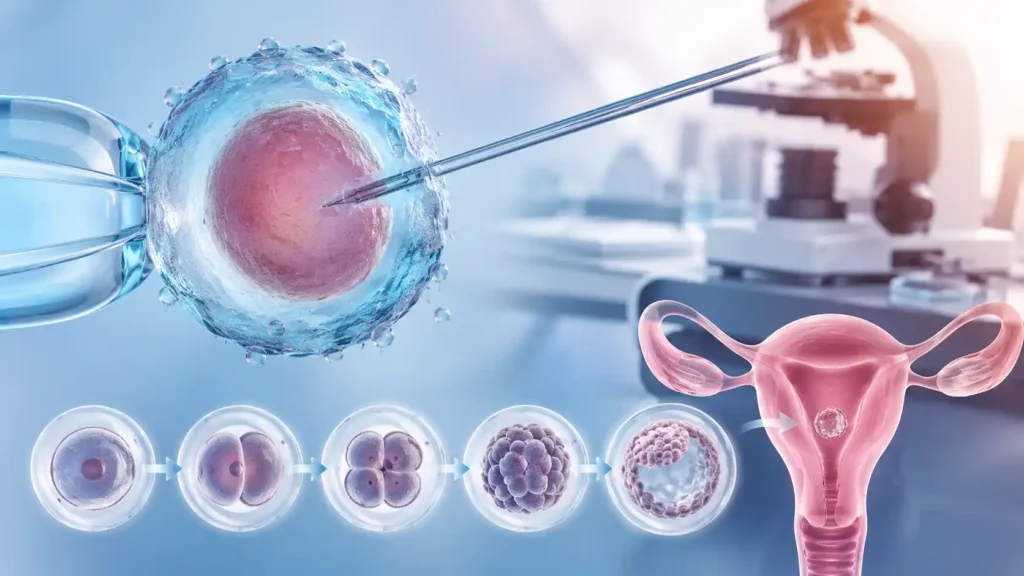
IVF stands for In Vitro Fertilization. It is an assisted reproductive technology in which fertilization takes place outside the body in a laboratory setting.
During IVF treatment, eggs are retrieved from the ovaries and combined with sperm in a laboratory. Once fertilization occurs and embryos develop, an appropriate embryo may be transferred into the uterus.
The IVF process generally includes several stages:
- Initial fertility assessment
- Ovarian stimulation
- Follicular monitoring
- Egg retrieval
- Sperm collection
- Fertilization
- Embryo development
- Embryo transfer
- Pregnancy testing and follow-up
The exact IVF protocol can vary depending on the patient’s age, ovarian reserve, medical history, previous treatment and other reproductive factors.
When Should You Consult an IVF Specialist in Kanpur?

Not every couple experiencing difficulty conceiving immediately requires IVF. However, consulting a fertility specialist can help identify possible causes and determine whether treatment is needed.
You may consider consulting an IVF Specialist in Kanpur if:
- You have been trying to conceive without success
- Your menstrual cycles are irregular
- You have ovulation-related problems
- You have PCOS
- You have endometriosis
- You have blocked or damaged fallopian tubes
- You have reduced ovarian reserve
- You have experienced repeated miscarriages
- Previous fertility treatments were unsuccessful
- Male-factor infertility is suspected
- The cause of infertility remains unexplained
Age can also influence fertility, particularly female fertility. Therefore, seeking timely medical advice can be helpful when conception is taking longer than expected.
Common Causes of Infertility
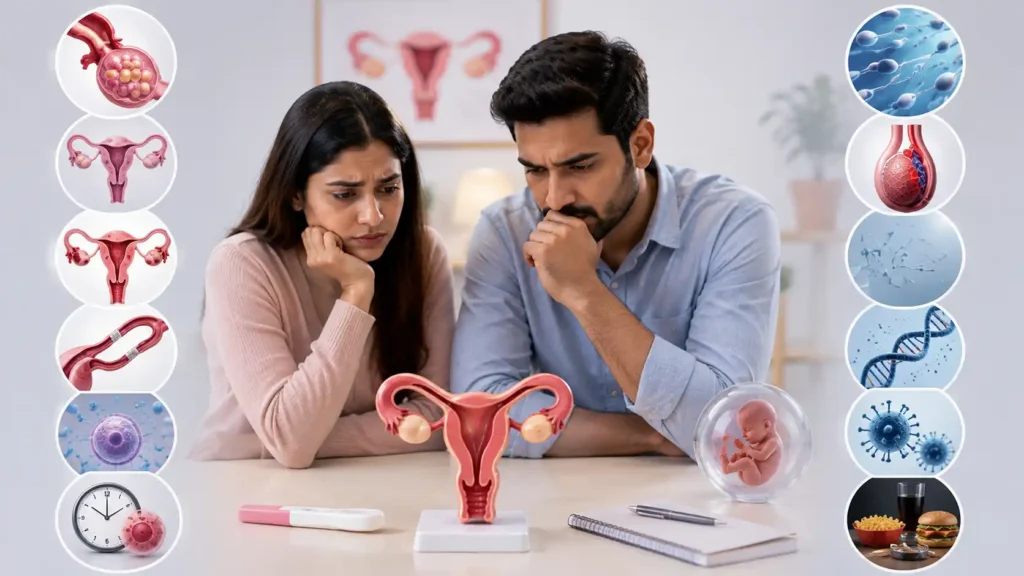
Infertility can result from female factors, male factors, a combination of both or sometimes from causes that cannot be immediately identified.
Female Infertility
Some common female fertility factors include:
- Ovulation disorders
- Polycystic ovary syndrome
- Endometriosis
- Blocked fallopian tubes
- Reduced ovarian reserve
- Hormonal imbalance
- Uterine abnormalities
- Fibroids
- Age-related fertility decline
A proper evaluation can help identify which factors may be affecting conception.
Male Infertility
Male reproductive factors can also contribute to infertility. These may include:
- Low sperm count
- Poor sperm motility
- Abnormal sperm morphology
- Certain hormonal conditions
- Previous testicular problems
- Certain infections
- Other reproductive health conditions
This is why fertility evaluation should ideally involve both partners.
VF Treatment Process in Kanpur
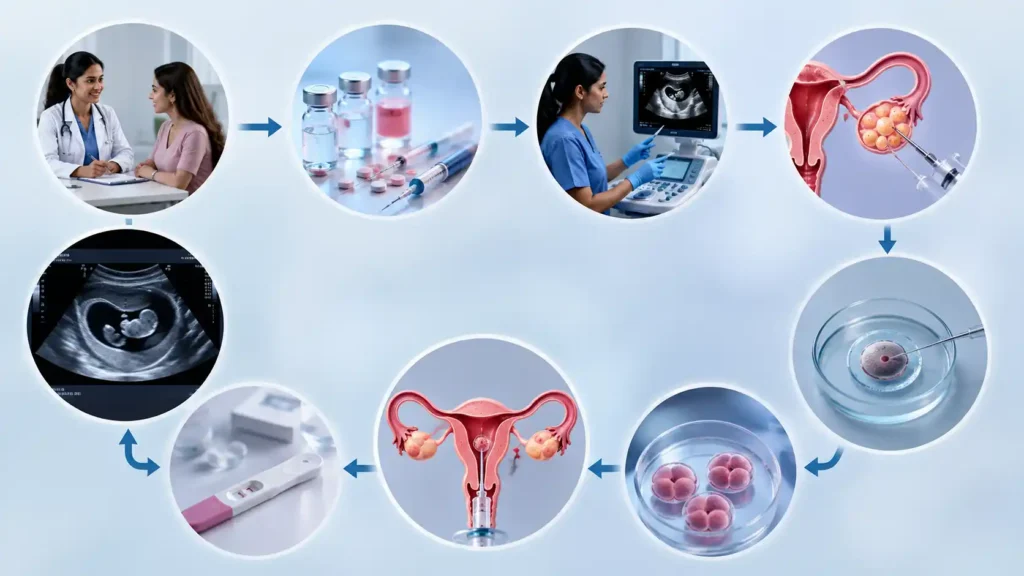
Understanding the IVF treatment process can help couples prepare for their fertility journey.
Step 1 – Fertility Evaluation
The first step is usually a detailed fertility assessment. The doctor may review your medical history, menstrual cycle, previous pregnancies, previous treatments and lifestyle factors.
Depending on the situation, investigations may include blood tests, ultrasound, semen analysis and other fertility-related examinations.
Step 2 – Ovarian Stimulation
During many IVF protocols, fertility medications are used to encourage the ovaries to develop multiple follicles.
The response to medication is monitored through clinical evaluation and ultrasound examinations.
Step 3 – Egg Retrieval
When the follicles reach the appropriate stage, eggs are retrieved through a planned medical procedure.
The retrieved eggs are then transferred to the fertility laboratory for further treatment.
Step 4 – Sperm Collection and Preparation
A sperm sample is generally collected from the male partner and evaluated in the laboratory.
The sperm may be prepared using appropriate laboratory techniques before fertilization.
Step 5 – Fertilization
The retrieved eggs and prepared sperm are combined in the laboratory.
Depending on the couple’s medical situation, conventional IVF or other assisted fertilization techniques may be considered.
Step 6 – Embryo Development
Following fertilization, embryos are observed and monitored as they develop.
The fertility team evaluates embryo development before determining the next stage of treatment.
Step 7 – Embryo Transfer
When appropriate, an embryo is transferred into the uterus.
The number and timing of embryo transfer depend on the individual treatment plan and relevant medical considerations.
Step 8 – Pregnancy Test
After embryo transfer, the patient receives instructions regarding medications, follow-up and pregnancy testing.
Further monitoring is recommended if pregnancy is confirmed.
VF and IUI – What Is the Difference?
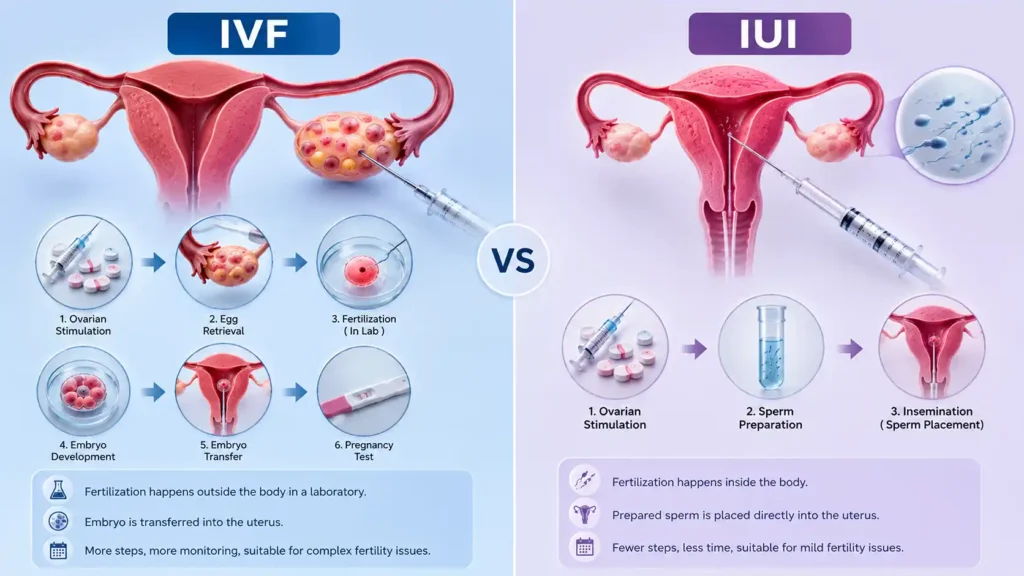
Patients often ask about the difference between IVF and IUI treatment in Kanpur.
IUI, or Intrauterine Insemination, involves placing specially prepared sperm directly into the uterus around the time of ovulation. Fertilization takes place inside the body.
IVF is different because fertilization occurs outside the body in a laboratory before an embryo is transferred into the uterus.
Neither treatment is automatically suitable for everyone. The choice depends on several factors, including:
- Age
- Duration of infertility
- Ovarian reserve
- Sperm quality
- Ovulation
- Fallopian tube condition
- Previous fertility treatment
- Overall reproductive health
A fertility specialist can help determine which treatment may be appropriate.
VF Treatment for PCOS
Polycystic Ovary Syndrome, commonly known as PCOS, is a common condition that can affect ovulation and fertility.
Women with PCOS may experience:
- Irregular periods
- Irregular ovulation
- Hormonal changes
- Acne
- Increased facial or body hair
- Weight-related concerns
- Difficulty conceiving
However, having PCOS does not automatically mean that IVF is necessary.
Treatment depends on the individual patient’s fertility profile. Some women may conceive with appropriate medical management, while others may require fertility treatments such as IUI or IVF.
A fertility specialist can assess ovulation, ovarian reserve and other factors before recommending treatment.
IVF for Male Infertility
Infertility is not only a female reproductive health concern. Male factors can also play an important role in a couple’s difficulty conceiving.
A semen analysis can provide information about:
- Sperm concentration
- Sperm motility
- Sperm morphology
- Overall semen characteristics
Based on the results, additional investigations or fertility treatments may be recommended.
For couples undergoing IVF treatment, understanding both male and female fertility factors is important for creating an appropriate treatment plan.
IVF for Unexplained Infertility
Sometimes fertility tests do not reveal an obvious reason for difficulty conceiving. This may be referred to as unexplained infertility.
Even when no specific cause is identified, treatment options may still be available.
Depending on the patient’s age, duration of infertility, previous treatment and reproductive health, a doctor may discuss options such as continued natural attempts, fertility medication, IUI or IVF.
Factors That Can Affect IVF Outcomes
Many patients searching for the Best IVF Specialist in Kanpur also want to know about IVF success rates.
However, IVF outcomes can vary considerably between individuals. Several factors can influence treatment outcomes, including:
- Female age
- Egg quality
- Ovarian reserve
- Sperm quality
- Embryo development
- Uterine health
- Underlying medical conditions
- Previous IVF cycles
- Individual response to treatment
Therefore, no responsible fertility specialist can guarantee pregnancy through IVF.
A personalized consultation provides a better understanding of the factors that may influence an individual’s treatment.
Why Personalized IVF Treatment Is Important
Every fertility journey is different. A treatment approach that works for one couple may not be appropriate for another.
An individualized IVF plan may consider:
- Age
- Menstrual history
- Ovarian reserve
- Hormonal profile
- Sperm parameters
- Previous pregnancies
- Previous fertility treatments
- Uterine health
- Medical history
Personalized treatment planning allows the fertility specialist to select an approach according to the patient’s specific requirements.
How to Prepare for an IVF Consultation?
Before visiting an IVF Specialist in Kanpur, patients can prepare by collecting their previous medical records.
You may bring:
- Previous ultrasound reports
- Blood test reports
- Hormonal test reports
- Semen analysis reports
- Previous IVF or IUI records
- Pregnancy-related reports
- Surgical records
- Current medication details
It can also be helpful to prepare questions about the treatment process, investigations, possible risks, expected timeline and treatment expenses.
Why Consult Dr. Mamta Agnihotri for IVF Treatment in Kanpur?
Dr. Mamta Agnihotri professional focus includes women’s reproductive healthcare and fertility-related treatment. Her involvement in fertility-focused educational and professional programmes also reflects her association with the field of assisted reproduction.
Patients considering IVF can discuss their medical history, fertility concerns and treatment options with a qualified specialist before deciding on a treatment pathway.
The goal of an infertility consultation is not simply to start IVF but to understand the underlying situation and determine the most suitable approach for the couple.
Start Your Fertility Journey with the Right Guidance
Difficulty in conceiving can be stressful, but getting appropriate medical guidance can help couples understand their condition and available options.
If you are looking for an IVF Specialist in Kanpur, Dr. Mamta Agnihotri provides fertility-focused consultation and care for couples exploring infertility treatments such as IVF and IUI.
Every patient is different, and fertility treatment should be based on an individual’s medical history, reproductive health and diagnostic findings.
A consultation can help you understand:
- Possible causes of infertility
- Required fertility tests
- Available treatment options
- IVF procedure and stages
- Factors affecting treatment outcomes
- Suitable next steps
Finding the right IVF Specialist in Kanpur can be an important step for couples who are experiencing difficulty conceiving. IVF is an established assisted reproductive technology, but it is not a one-size-fits-all treatment.
If you have been trying to conceive without success, consider consulting a qualified fertility specialist rather than delaying evaluation. Early assessment can help identify possible fertility factors and provide a clearer direction for treatment.